
Why So Many Adults with ADHD Feel Stuck — and What Actually Helps
ADHD organisation tips that genuinely work look very different from standard productivity advice. Here’s a quick overview of the most effective systems:
Top ADHD-Friendly Organisation Tips at a Glance:
- Break spaces into zones – Use the quartering or clock method to divide rooms into small, manageable sections
- Use visual storage – Clear containers, open shelves, and color-coded labels fight “out of sight, out of mind”
- Sort with three boxes – “Keep here,” “goes elsewhere,” and “not sure” removes decision paralysis
- Work in short bursts – 10-15 minute timer sessions build momentum without burnout
- Create a launch pad – A dedicated spot near your door for keys, bags, and daily essentials
- Use the subtract-before-add rule – Remove one item before bringing a new one in
- Try body doubling – Work alongside a friend or accountability partner to start hard tasks
- Set up a ticker filing system – 43 labeled folders manage paper clutter day by day
- Do a 10-minute nightly pickup – A short daily habit prevents overwhelming build-up
- Reward yourself first – Use a small reward before starting a task to trigger motivation
Getting and staying organised is genuinely hard when you have ADHD. It’s not about laziness or lack of effort. ADHD affects the brain’s executive function — the system that handles planning, prioritising, and starting tasks. It also disrupts dopamine regulation, which makes routine tasks feel almost impossible to begin.
Time blindness makes it hard to estimate how long things take. Object permanence issues mean that if something is out of sight, it’s out of mind entirely. And task paralysis can leave you frozen, staring at a messy room, unsure where to even begin.
The result? A pile of apps you’ve abandoned, half-finished decluttering projects, and a nagging sense that you’re failing at something everyone else finds easy.
Here’s the truth: standard organisation systems weren’t built for ADHD brains. The good news is that ADHD-specific strategies — ones that work with your brain instead of against it — really do exist. And they stick.

Why Traditional ADHD Organisation Tips Often Fail
If you’ve ever felt like a “productivity app graveyard,” you aren’t alone. Most traditional advice assumes your brain has a steady supply of dopamine and a perfectly functioning frontal lobe. For those of us with ADHD, that’s simply not the case.
Physiologically, the ADHD brain struggles with dopamine regulation. Dopamine is the neurotransmitter responsible for motivation and the “reward” feeling we get when finishing a task. Without it, washing a single dish can feel as taxing as climbing Mount Everest. Furthermore, deficiencies in executive functions—specifically working memory and planning—make it incredibly difficult to hold multiple steps of a project in your head at once.
This often leads to analysis paralysis. When we look at a cluttered room, we don’t see “a desk that needs clearing”; we see 500 individual items that all require a decision. This cognitive overload triggers perfectionism—the fear that if we can’t do it perfectly, we shouldn’t do it at all. According to Scientific research on ADHD and executive function, these brain differences change how we retain and process information, which is why standard “just make a list” advice falls flat.
To actually make progress, we need Productivity Hacks for ADHD Adults that bypass these neurological roadblocks by adding external structure and immediate rewards.
Breaking Down Your Space with Visual ADHD Organisation Tips
One of the biggest hurdles in ADHD organization is the sheer “bigness” of a task. When a project feels too large, our brains shut down. To counter this, we use spatial division methods that turn one giant room into tiny, conquerable islands.
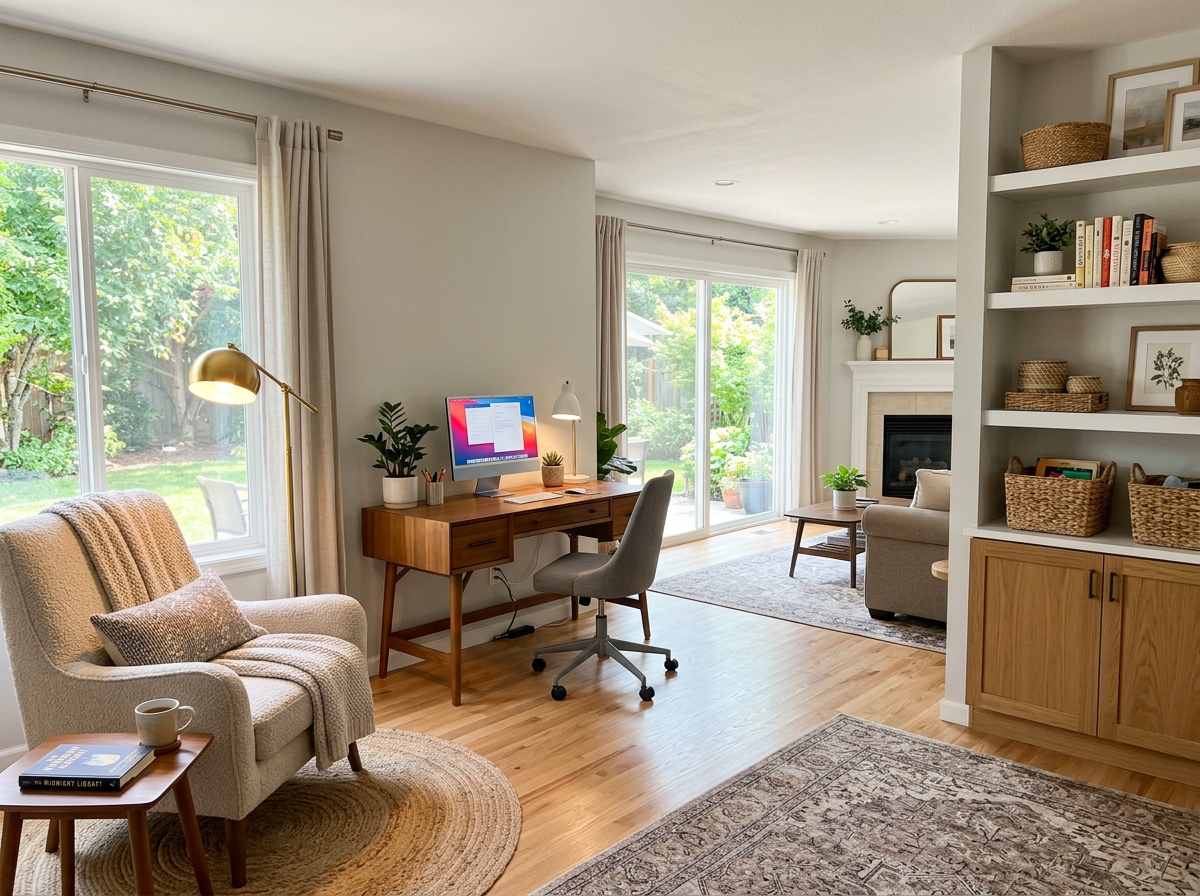
- The Quartering Method: Mentally (or with blue painter’s tape) divide a room into four quadrants. Your only goal for the session is one quadrant. Ignore the rest of the room entirely.
- The Clock Method: Stand at the doorway. Imagine the doorway is 12:00. Work your way around the room clockwise, one “hour” or section at a time.
- Functional Zones: Instead of organizing by item type, organize by activity. A “Financial Zone” might have your bills, a calculator, and a pen. A “Reading Zone” has your current book, glasses, and a lamp. This reduces the transition time spent hunting for supplies.
- Launch Pads: This is a dedicated station by the front door. It’s the “home” for your keys, wallet, phone, and umbrella. If it’s not on the launch pad, it doesn’t exist.
- Ripening Drawers: Sometimes we aren’t ready to decide on an item (like a random cord or a greeting card). Put it in a “ripening drawer.” When the drawer is full, sort it. This prevents “decision fatigue” from stopping your momentum.
For more on using sight to your advantage, check out Open Shelving Ideas for Visual Cues and our Visual Approach: A Guide to Decluttering for ADHD.
Using Zones to Combat “Out of Sight, Out of Mind”
The ADHD brain often struggles with “object permanence”—if we can’t see the extra lightbulbs, we buy more because we forget we have them. To fix this, we make our storage as visual as possible.
We recommend using clear containers for almost everything. If a bin is opaque, it needs a giant label. Color-coding is another lifesaver; use red folders for urgent “act now” papers and blue for “reference only.”
Don’t underestimate the power of Color-Coded Labels for Home Organization for ADHD. When your brain can associate a color or a visual cue with a location, it saves the “mental energy” usually spent on searching.
Step-by-Step Decluttering Systems for Neurodivergent Brains
Decluttering is often where we get stuck in the “sentimental spiral.” We pick up an old concert ticket and suddenly we’re 20 minutes deep into a memory, and the cleaning has stopped. To prevent this, we use a systematic sorting process.
- Keep Here: Items that belong in the specific zone you are currently working on.
- Goes Elsewhere: Items that belong in the house but in a different room. Crucial tip: Do not leave the room to put them away yet! Put them in the box and move them at the very end of your session.
- Trash/Donate: Items leaving the house forever.
- The “Not Sure” Box: This is the ADHD safety net. If you can’t decide on an item within 5 seconds, put it in this box. Seal it, write a date 6 months from now on it, and put it in the garage. If you haven’t opened it by that date, donate the whole box without looking inside.
To keep the clutter from returning, we use the Subtract Before Add rule. Want a new sweater? One old one must go first. This creates a natural equilibrium in your home. For a deeper dive, follow our Conquer Clutter: A Step-by-Step Guide for Adults with ADHD or try the Box It Up: Declutter Using the 4-Box Method.
Low-Tech ADHD Organisation Tips for Paper Management
Paper is the natural enemy of the ADHD brain. It’s flat, it piles up, and it’s easy to ignore until it becomes a mountain.
The Ticker Filing System (or “43 Folders” method) is a game-changer. You set up 12 folders for the months and 31 folders for the days of the month. When a bill comes in that’s due on the 15th, you drop it in folder #15. You only ever have to look at one folder per day.
Other paper-busting adhd organisation tips include:
- Scanning: Use your phone to scan documents immediately and then shred the original.
- Document Hot-Spots: Use a single, bright red transparent folder for the 3-5 most urgent papers you need to handle in the next 24 hours.
- Unsubscribe: Use services to remove your name from junk mail lists to stop the flow before it starts.
You can find more simplified strategies in our guide on Simplified Paper Organizing with Labels for ADHD.
Motivation Hacks to Start and Finish Tasks
Motivation for the ADHD brain isn’t about “willpower”—it’s about dopamine. We have to “hack” our brain to find the task interesting or urgent.
- Body Doubling: This is one of the most effective adhd organisation tips. It simply involves having another person in the room (or on a video call) while you work. They don’t have to help; their presence acts as an “anchor” that keeps you on task.
- The Pomodoro Technique: Work for 25 minutes, break for 5. Or, if 25 feels too long, use the 15-minute rule. Tell yourself, “I will only do this for 15 minutes.” Usually, starting is the hardest part; once the timer goes off, you might find you have the momentum to keep going.
- Gamification: Set a timer and see if you can “beat the clock” to unload the dishwasher. Use apps that give you “XP” or rewards for completing chores.
- Reward Yourself First: This sounds counterintuitive, but sometimes having a piece of chocolate or listening to a favorite song before a boring task provides the dopamine spark needed to begin.
For more expert advice, see these Time Management Tips for People With ADHD and our own ADHD-Friendly Task Management Tips.
Building Momentum with Tiny ADHD Organisation Tips
When you’re overwhelmed, think Micro-steps. Don’t “clean the kitchen.” Just “wash three forks.” Often, the success of a tiny win leads to a “side quest” where you end up doing more than planned.
We also highly recommend Brain Dumps. When your mind is racing with 20 different things you need to do, write them all down on a single “Parking Lot” list. This offloads the burden from your working memory so you can focus on the one task in front of you.
Check out these Mini Side Quests and Tiny ADHD Declutter Wins for the Easily Distracted to start building your momentum today.
Daily Maintenance Habits for Long-Term Success
The goal isn’t to be “organized” once; it’s to create a sustainable environment. We find that small, daily rituals are much more effective than giant weekend cleaning marathons.
| Habit Type | Examples | Frequency |
|---|---|---|
| In the Moment | Putting a dish in the washer immediately; hanging up a coat. | Continuous |
| Scheduled Maintenance | 10-minute nightly pickup; checking the “ticker” file. | Daily |
| Deep Reset | Clearing the “Not Sure” box; reviewing the calendar. | Monthly/Quarterly |
A 10-minute pickup at the end of the night—where you just put things back in their “homes”—can prevent the week-long clutter build-up. We also love the Handy Box method: if you find something that belongs in another room while you’re busy, put it in the box. Carry the box with you when you finally leave the room.
To make these stick, try habit stacking: do your 10-minute pickup while your evening tea is steeping or while listening to a specific podcast. Explore more Daily Habits to Maintain Tidy Spaces and how to build a solid Evening Routine to Stay Organized.
Frequently Asked Questions about ADHD Organisation
Why do digital task managers often fail for ADHD?
Digital apps often fail because of the “out of sight, out of mind” rule. Once the notification is swiped away, the task disappears. Many apps are also too complex, leading to dopamine fade once the novelty of the new app wears off. For an app to work for ADHD, it needs to be simple, highly visual, and have “sticky” reminders that don’t disappear until the task is done.
What is the “Not Sure” box method?
It is a strategy to combat decision paralysis. When decluttering, we often get stuck wondering, “What if I need this later?” The “Not Sure” box acts as a safety net. By delaying the final disposal by 6 months, you lower the emotional stakes of the decision, making it easier to clear the immediate clutter.
How does body doubling help with cleaning?
Body doubling works through social motivation and accountability. It’s much harder to get distracted by your phone when someone else is there “watching” you (even if they are just reading a book). It helps with task initiation—the hardest part of ADHD—by making the environment feel more structured and less lonely.
Conclusion
At Educacao Play, we believe that your home should be a sanctuary, not a source of stress. The key to adhd organisation tips is realizing that “good enough” is better than perfect. You don’t need a Pinterest-perfect home; you need a system that allows you to find your keys and pay your bills on time.
Be kind to yourself. Progress isn’t linear, and there will be days when the systems break down. That’s okay. Just reset, pick one “micro-step,” and start again. For more practical strategies on building a life that works for your unique brain, explore our More info about lifestyle systems page. You’ve got this!
