
Why Streamlined ADHD Self Care Changes Everything
Streamlined ADHD self care is the practice of simplifying your daily habits, routines, and environment so managing ADHD symptoms feels less overwhelming and more automatic.
Quick answer – the core pillars of streamlined ADHD self care:
- Build simple daily routines – consistent wake times, morning and evening anchors
- Break tasks into tiny steps – use timers and checklists to reduce overwhelm
- Optimize your environment – declutter, designate spots for items, reduce sensory noise
- Support your body – prioritize sleep (7-9 hours), protein-rich meals, and regular movement
- Use technology as your assistant – alarms, apps, and automated reminders do the remembering for you
- Practice self-compassion – progress over perfection, every single time
Living with ADHD as a busy professional or parent can feel relentless. You wake up with good intentions. Then the laundry, the missed deadline, and the keys you can’t find derail everything before 9am.
The problem isn’t effort or willpower. ADHD affects executive function – the brain systems that handle planning, focus, memory, and time management. That makes even basic self-care feel like climbing a hill in wet sand.
Here’s the encouraging part: small, consistent changes work better than big, perfect systems. Research consistently shows that structured routines reduce anxiety and make daily habits far easier to stick to for people with ADHD. You don’t need to overhaul your life. You need smarter, simpler systems.
This guide walks you through exactly how to build them.

Understanding Inattentive ADHD and Executive Function
When most people think of ADHD, they picture a child bouncing off the walls. However, millions of people live with Inattentive ADHD, the most common type of the disorder. Unlike the hyperactive-impulsive type, Inattentive ADHD targets your ability to concentrate, stay organized, and follow through on tasks.
Because there is an absence of physical hyperactivity, many adults—especially women—go undiagnosed until later in life. They aren’t “lazy” or “careless”; their brains are simply wired differently. Research suggests that genetics, brain structure, and even prenatal factors play a role in how the ADHD brain processes information.
The core challenge lies in executive function. This is the brain’s “command center” responsible for:
- Working Memory: Holding information in mind while working with it.
- Cognitive Flexibility: Switching between tasks or thinking about things in different ways.
- Inhibitory Control: Resisting impulses and staying focused on a goal.
For those of us with ADHD, these “gears” often get stuck. Symptoms usually begin before age 12 and must persist for at least six months across multiple settings (like home and work) to meet diagnostic criteria. Understanding that this is a neurodevelopmental condition is the first step toward effective, streamlined adhd self care.
Distinguishing Inattentive ADHD from Hyperactive Types
While hyperactive ADHD is visible through fidgeting and restlessness, Inattentive ADHD is an internal struggle. It manifests as “mind wandering,” losing important items like keys or phones, and struggling to meet deadlines.
The tragedy of Inattentive ADHD is the laziness myth. Because the struggle is invisible, individuals are often misjudged by teachers, employers, or even family members as being unmotivated. In reality, the ADHD brain is often running on “high-octane fuel” but lacks the steering wheel to direct that energy efficiently. Adult diagnosis often brings a wave of relief—a realization that the “chaos” wasn’t a character flaw, but a manageable medical condition.
Mastering Streamlined ADHD Self Care Through Daily Habits
The secret to streamlined adhd self care isn’t doing more; it’s making the “must-dos” easier. We want to reduce the “friction” of daily life.
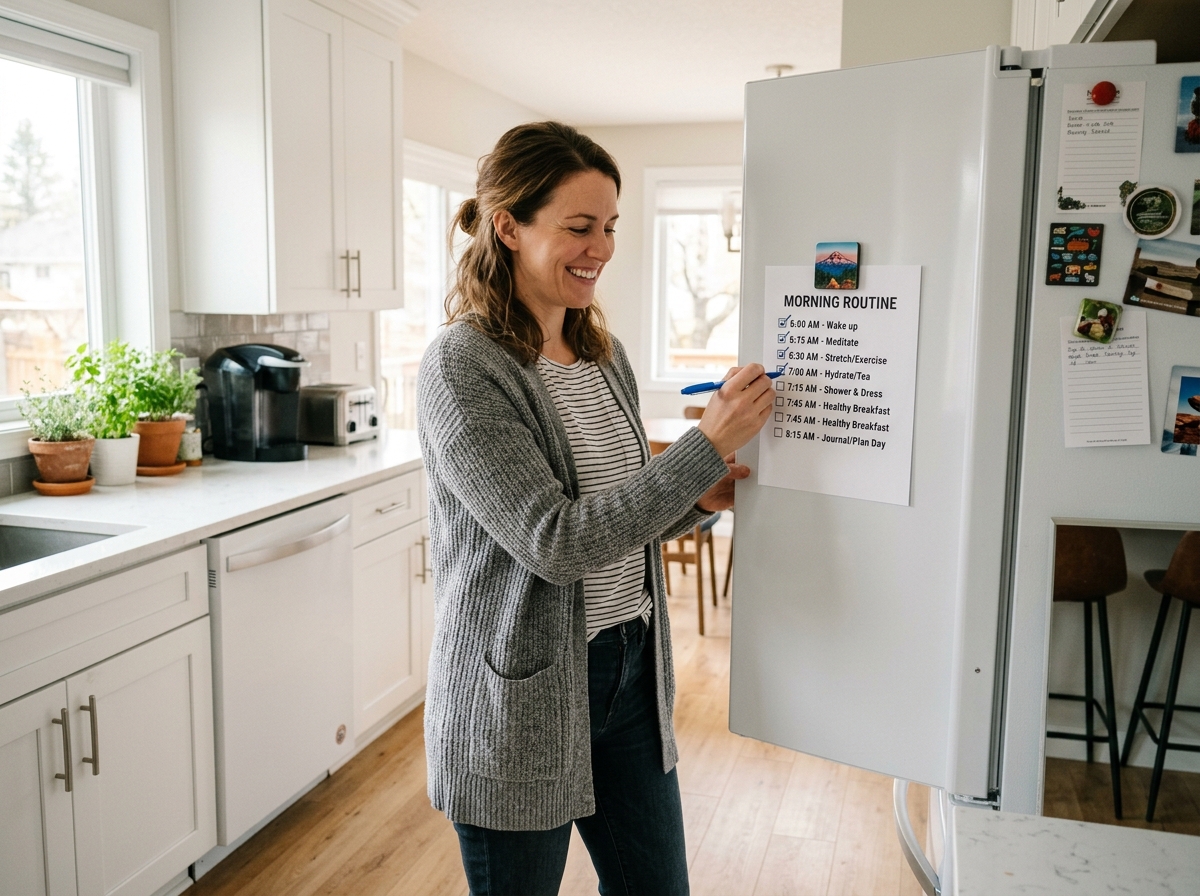
A structured daily routine provides stability and predictability. Start with your “anchors”—the morning and evening. For the morning, focus on adhd-friendly morning routine tips for focus to set the tone for the day. This might include a protein-packed breakfast (which helps stabilize neurotransmitters) and a quick review of your top three tasks.
Equally important is an evening routine to stay organized. This is where you set “Future You” up for success. Laying out clothes or packing a bag the night before prevents the 7:00 AM panic.
Key Biological Pillars:
- Dopamine Regulation: ADHD brains crave dopamine. Regular physical activity provides a healthy outlet for excess energy and boosts focus naturally.
- Nutrition: Incorporate Omega-3 fatty acids and lean proteins. Avoid sugar spikes that lead to “brain fog” crashes.
- Sleep Hygiene: Aim for 7-9 hours. Use blue light filters on devices and set a “wind-down alarm” two hours before bed.
Leveraging Technology for Streamlined ADHD Self Care
We live in an era where technology can act as an external brain. If your internal working memory is struggling, outsource it!
Using productivity hacks for adhd adults often involves digital tools. The Pomodoro Technique (working for 25 minutes followed by a 5-minute break) is a lifesaver for those who struggle with sustained attention. Visual timers are particularly helpful because they turn the abstract concept of “time” into something you can actually see disappearing.
Consider these adhd-friendly task management tips:
- Automate Everything: Set up automatic bill payments so you never face a late fee again.
- Recurring Reminders: Use your phone to remind you to take medication, water the plants, or even just drink a glass of water.
- Digital Alarms: Don’t just use one for waking up; use them to signal transitions between tasks.
Breaking Down Tasks and Prioritization
Overwhelm is the enemy of progress. When a task feels too big, the ADHD brain often shuts down (this is known as “ADHD paralysis”). The solution is to break every project into “micro-milestones.” Instead of “Clean the Kitchen,” try “Put three dishes in the dishwasher.”
To handle prioritization, we recommend the Eisenhower Matrix:
- Urgent & Important: Do these now.
- Important but Not Urgent: Schedule these.
- Urgent but Not Important: Delegate or automate.
- Neither: Delete.
Implementing home office routines for focus can help you designate a “Power Hour” for unpleasant tasks. Pair this with the two-minute rule: if a task takes less than two minutes (like hanging up a coat), do it immediately to prevent “clutter creep.”
Optimizing Your Environment and Cognitive Focus
Your physical space is a reflection of your mental state—and vice versa. Environmental self-care is about removing the “visual noise” that pulls your attention away from what matters.
Start by decluttering for success in your primary workspace. Use noise-canceling headphones to block out auditory distractions. If you struggle with losing things, create “homes” for every item.
We love the strategy of creating an adhd-friendly cleaning routine with labels. When every bin and drawer is labeled, you don’t have to use executive function to “decide” where something goes—the label tells you. Color-coding folders or digital calendars also provides instant visual cues that the ADHD brain processes faster than text.
The Role of Mindfulness in Streamlined ADHD Self Care
Mindfulness isn’t about sitting perfectly still for an hour (which is nearly impossible for some of us!). It’s about mind over mess and decluttering for mental clarity.
Simple techniques like 4-7-8 breathing (inhale for 4, hold for 7, exhale for 8) can reset a spiraling nervous system in under a minute. Another great tool is the STOP technique:
- Stop what you are doing.
- Take a breath.
- Observe your thoughts and feelings.
- Proceed with a more intentional action.
These grounding exercises help with emotional regulation, preventing the “mood swings” that can sometimes make social interactions feel like a minefield.
Creating a Supportive Social Environment
You don’t have to do this alone. Building a supportive network is a vital part of streamlined adhd self care.
Practice using “I” statements to communicate your needs to partners or roommates. For example: “I feel overwhelmed when the mail piles up on the counter; can we designate a specific bin for it?”
Many in the community find success with daily habits to maintain tidy spaces by using body-doubling. This is the practice of working alongside someone else (even virtually) to stay on task. It provides a gentle layer of accountability that makes “boring” tasks like laundry or filing taxes much easier to initiate.
Overcoming Executive Dysfunction and Professional Support
Procrastination and “time blindness” (the inability to sense how much time has passed) are hallmarks of executive dysfunction. Overcoming these requires a shift in mindset: move from “I should be able to do this” to “How can I make this easier for my brain?”
Adopting a growth mindset means viewing “failures” as data. If you didn’t stick to your routine hacks to prevent clutter this week, don’t beat yourself up. Instead, ask what the barrier was. Was the system too complex? Did you forget to set a reminder?
Celebrate every win, no matter how small. Did you put your keys in the designated bowl today? That’s a victory! Maintaining work-life balance is about recognizing that your worth isn’t tied to your productivity.
Tailoring Self-Care for Different Life Stages
ADHD looks different depending on your responsibilities. A student needs study hacks, while a parent needs time saving routines for busy homes.
| Life Stage | Primary Challenge | Streamlined Strategy |
|---|---|---|
| Students | Deadlines & Focus | Pomodoro technique; academic accommodations; body-doubling. |
| Executives | Attention to Detail | Priority matrices; delegating low-impact tasks; time-blocking. |
| Parents | Constant Interruptions | Visual schedules for kids; meal prepping components; “launch pads” by the door. |
When to Seek Professional Diagnosis and Help
While streamlined adhd self care strategies are powerful, they are often most effective when paired with professional support. If your symptoms are causing significant distress in your relationships, health, or career, it may be time to consult a professional.
A psychiatrist or psychologist can guide you through the screening process to rule out co-existing conditions like anxiety or depression. Treatment often involves a combination of:
- Medication Management: Helping to balance brain chemistry.
- ADHD Coaching: Providing goal-oriented, practical advice.
- Cognitive Behavioral Therapy (CBT): Changing negative thought patterns.
Implementing a weekly home maintenance routine becomes much easier when your brain has the chemical support it needs to function optimally.
Frequently Asked Questions about ADHD Management
What is the most effective self-care for ADHD?
The most effective self-care is the one you can actually stick to. Generally, this involves a “bottom-up” approach: prioritize sleep, nutrition, and movement first, then layer on organizational tools and routines.
How do I stop procrastinating with ADHD?
Stop waiting for “motivation.” Use external triggers like timers, body-doubling, or the “two-minute rule.” Break the task down until the first step is so small it feels silly not to do it.
Can diet and exercise replace ADHD medication?
For some, lifestyle changes significantly reduce symptoms, but for many, medication is a necessary tool that makes those lifestyle changes possible. Always consult with a healthcare provider before making changes to your treatment plan. For more on building a comprehensive plan, check out this ADHD-Friendly Self-Care Plan.
Conclusion
At Educacao Play, we believe that managing ADHD shouldn’t feel like a second full-time job. By focusing on streamlined adhd self care, you can move away from the cycle of shame and overwhelm toward a life of “good enough” consistency.
Remember: you are building these habits for “Future You.” Every time you put your keys in their spot or prep a healthy snack, you are giving a gift to the person you will be tomorrow. Embrace the journey, celebrate the small wins, and keep moving forward.
