Pumpkin Display Ideas for a Table, Shelf or Mantel
A styling guide for no-carve pumpkin groups: odd numbers, three sizes, two or three colors, risers for height, leafy fillers and a tray, plus how to protect surfaces under real pumpkins.

The best pumpkin display ideas have very little to do with how many pumpkins you own. A handful of pumpkins set down in a row looks like a shopping trip; the same handful arranged with a little thought looks like a centerpiece.
What follows is a short set of styling habits that work on a dining table, a bookshelf or a mantel: how many to group, which sizes and colors to mix, how to add height, and what to tuck in around the edges. No carving is involved anywhere.
Group in Odd Numbers
Three, five or seven pumpkins look more relaxed than two, four or six. An even number tends to split into pairs, while an odd number gives the eye a middle to rest on.
The basic unit is a group of three arranged as a loose triangle. Put the tallest pumpkin at the back, the medium one in front and to one side, and the smallest at the front on the other side, with all three touching or nearly touching.
For a longer surface, build two or three of these triangles and leave some empty space between them. Gaps are part of the display; a shelf filled edge to edge looks crowded.

Mix Three Sizes and Two or Three Colors
Size contrast is what makes a group interesting. Aim for one large, one or two medium and several small pumpkins, where each step is clearly different, roughly half the size of the one above it.
Keep the color count low. Two or three colors look planned; five look accidental. Some combinations that work:
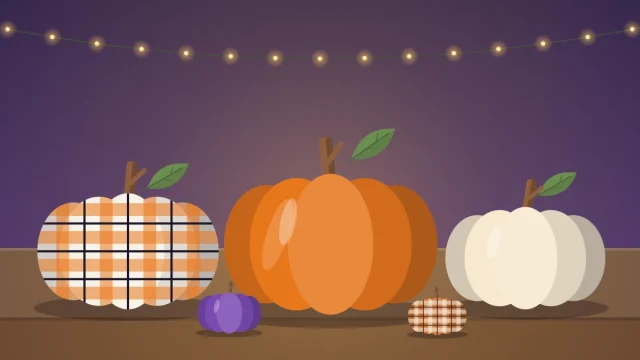
- Orange, white and green: the classic harvest mix, bright and friendly.
- White and soft gray-green: calm and pale, good for a light room.
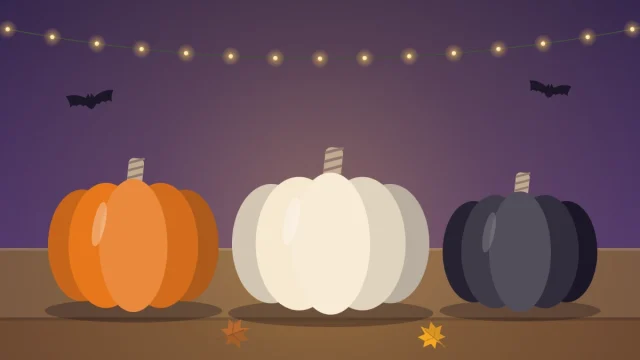
- Orange and black: the most clearly Halloween, especially with one or two matte black painted pumpkins.
- All white with one orange: a single accent draws the eye exactly where you put it.
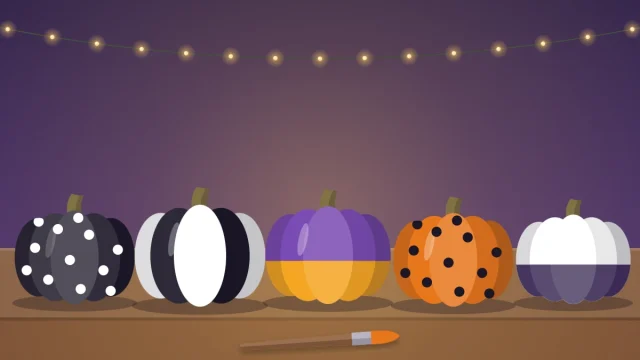
Shape counts as variety too. A flat, ribbed pumpkin beside a tall, smooth one adds interest even when both are the same color. If you want pattern as well, a few painted or wrapped pieces from the guide to no-carve pumpkin decorating ideas can sit among the plain ones.
Add Height with Books, Crates and Cake Stands
Pumpkins are all roughly round and low, so a display on one level looks flat. Raising a few of them is the quickest fix.
| Riser | Lift | Best for |
|---|---|---|
| Stack of two or three old books | About 2 to 4 in (5 to 10 cm) | Shelves and mantels |
| Small wooden crate, on its side or upside down | About 6 to 8 in (15 to 20 cm) | Sideboards and entry tables |
| Cake stand | About 4 to 6 in (10 to 15 cm) | Dining and party tables |
| Upturned bowl or flowerpot | Varies | Hidden lift under a cloth |
Aim for three levels: the surface itself, a low riser and a taller one. Put the heaviest pumpkins on the lowest, widest supports, and save the high spots for small or lightweight ones. Press gently on each raised pumpkin to check that it sits steady; a pumpkin that rocks needs a flatter base or a lower perch.
Tuck In Leaves, Moss or a Garland
Filler softens the line where pumpkins meet the table and ties separate groups together.
- Faux or pressed autumn leaves, slipped under the edges of the pumpkins
- Small clumps of dried moss in the gaps
- Pinecones, acorns or seed pods scattered in threes
- A felt or paper garland winding loosely between the groups
- A short strand of battery fairy lights, with the battery pack hidden behind the largest pumpkin
Use one or two of these, not all five. Dried leaves, moss and paper should only ever be paired with flameless lights, so choose battery tea lights or LED strands instead of real candles.
Mix Real, Fabric and Paper Mache Pumpkins
A display does not have to be all real pumpkins. Mixing materials adds texture, cuts the weight, and means part of the arrangement can be stored and brought out again.
- Real pumpkins and gourds bring natural color, stems and the odd bump or stripe.
- Fabric pumpkins add softness and pattern, and weigh almost nothing, which makes them ideal for high or narrow spots. The no-sew fabric pumpkins project shows how to make a set from scraps.
- Paper mache and craft pumpkins can be painted any color you are missing, so they fill gaps in a palette.
Spread the materials through the group so the handmade ones are mixed in among the real ones, and repeat each color at least twice.
Use a Tray to Contain a Group
A tray gives small pumpkins a boundary. Five minis loose on a table look scattered; the same five on a round tray become one object. A tray is also practical on a dining table, because the whole arrangement lifts off in one move when the surface is needed.
- Choose a tray, shallow basket or wooden board about 12 to 16 inches (30 to 40 cm) across.
- Line it with a layer of moss or leaves.
- Set the largest of the small pumpkins slightly off-center.
- Arrange the others around it, turning the stems in different directions.
- Thread a short strand of battery fairy lights through the gaps, if you like a glow in the evening.

Table, Shelf or Mantel: Adjusting the Layout
Table: keep the display low enough to see across, or contained on a tray, and leave room for plates and elbows.
Shelf: depth is limited, so use smaller pumpkins, books as risers, and one group per shelf.
Mantel: work in a long line with the tallest group off to one side and the heights stepping down. The guide to Halloween mantel decor covers the full layered layout.
Protect Surfaces and Check Real Pumpkins
Real pumpkins can leak moisture from the base as they age, and that can mark wood, paint and fabric.
Tip
Slip a saucer, a coaster, a plastic lid or a square of cardboard under every real pumpkin. Leaves or moss will hide it.
How long a real pumpkin stays firm varies widely with its condition, the room temperature and the light. Lift each one every few days, look at the base and press gently near the stem. Remove any pumpkin that feels soft, smells off or shows damp spots, and wipe the surface underneath. Keeping the display out of direct sun and away from heat sources helps.
Frequently asked questions
How many pumpkins do I need for a good display?
Three is enough for a shelf or a small table: one large, one medium and one small, set in a loose triangle. Five to seven suit a mantel or sideboard, split into two or three groups with space between them. Odd numbers and clear size differences matter more than the total count.
How do I stop real pumpkins from marking furniture?
Put a barrier under every real pumpkin, such as a saucer, coaster, plastic lid or piece of cardboard, and hide it with leaves or moss. Lift the pumpkins every few days to check the base for soft or damp spots, and remove any that have started to turn before they leak onto the surface.
Can I mix real and craft pumpkins in one display?
Yes, and it usually looks better than either alone. Real pumpkins bring natural color and stems, fabric ones add softness and very little weight, and paper mache or craft pumpkins can be painted to fill a missing color. Spread the materials through the group and repeat each color at least twice.